Thanks to Callisto Lodwick for today’s guest post! This is the third of Callisto’s three guest posts, funded by the St Andrews Research Internship Scheme.
The pine forests that cover the slopes of Parnassos above Delphi are delightful in their own right: they blanket the ground with gentle shade and occasionally give ways to sweeping views of the surrounding valleys. But the forest also holds secrets: tucked away in the woods is the Corycian Cave, a cavern that marks an ancient centre of worship.
The surrounding area is unassuming—simply a wooded track. Yet when you turn a corner, the trees give way to a sloping meadow, with a cave opening directly in the rock face.
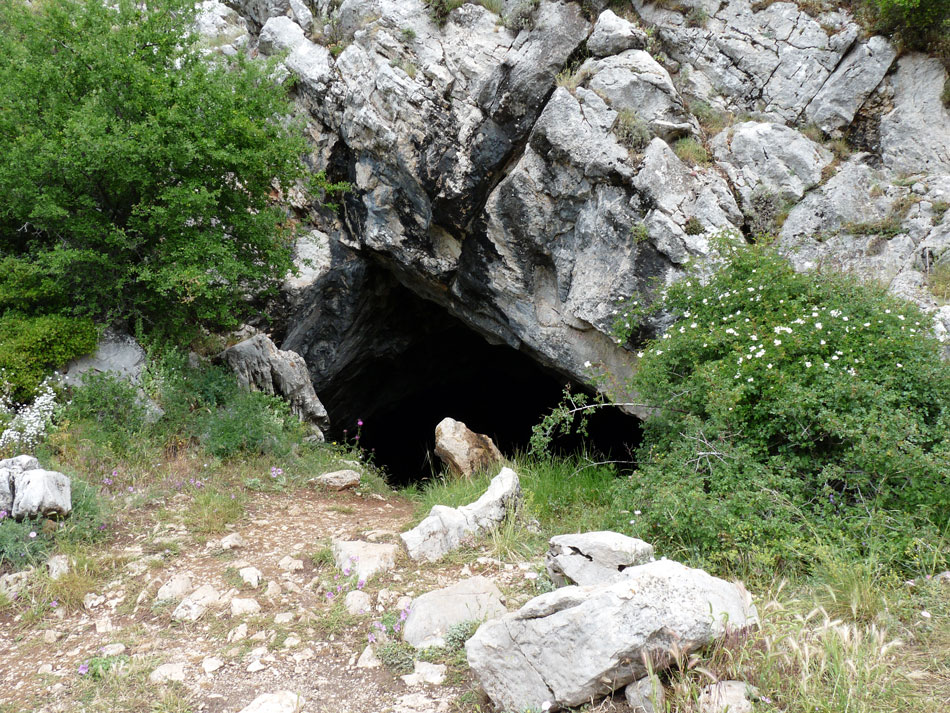
This location has the benefit of offering a view of the lower plain, which has helped make the Corycian Cave a centre of refuge for millennia.
Early visitors
The first evidence of human occupation in the cave dates back to the Neolithic period, from around 4300-3000 BCE. The cave was used again as a site for worship during the Mycenaean period, but abandoned in the 14th century BCE.
It isn’t until the 8th century BCE that we start to see the signs of human activity make a return. These come in huge numbers: in the 1970s, 50,000 pieces of votive ceramics—small figurines usually depicting a god—and 24,000 knucklebones, used as dice or for prophecy, were uncovered. The modest offerings found in the cave, in contrast to the vast riches dedicated in Delphi, point to a very different demographic of visitors between the two sites, despite their proximity.
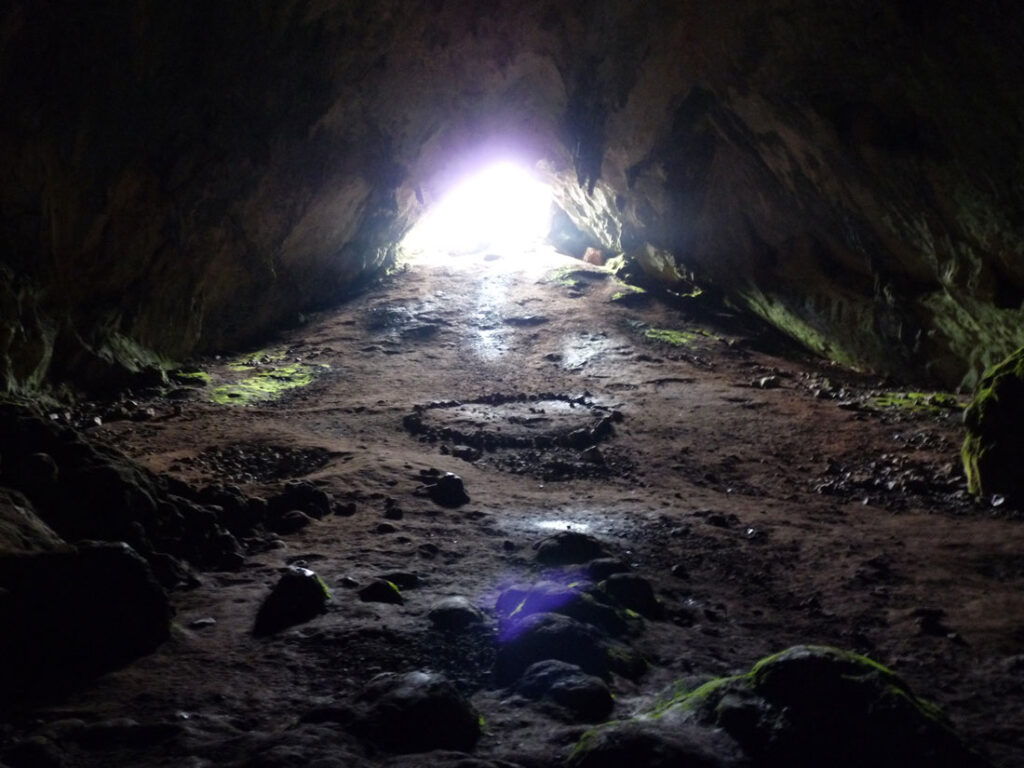
But what drew these numbers of people to the cave? Sophocles, Aeschylus, Ovid, Apollonius of Rhodes, and more all mention the Corycian nymphs as the cave’s inhabitants. Pausanius (Periegesis 10.32.7) tells us that the cave was sacred to Pan, a rustic nature god well suited to the rural setting of the Parnassos foothills.
The Roman tourist trail
After the second century BCE, visitation to the cave again declined. Then, in the first century CE, people starting arriving again: not as worshippers, but as tourists (as far as we can separate the two: there often wasn’t a clear-cut distinction between tourism and religious travel in antiquity). The Corycian Cave was a top attraction for Roman tourists visiting Delphi: the many terracotta lamps found in the cave, used for sightseeing in the darkness, are signs of their presence.
Strabo and Pausanius both recommend the cave to visitors for its beauty and ease of access. In his Geography, written in the early first century CE, Strabo tells us that ‘the whole of Parnassos has an atmosphere of sanctity, since it has caves and other places that are honoured and thought of as holy. The best known and most beautiful of those is the Corycian, a cave of the nymphs’ (9.3.1).
Pausanius offers practical advice for tourists: ‘the path up to the Corycian cave is easier for an active person than it is for mules and horses … of all the caves I have seen this one seemed to me to be worth seeing most of all’ (Periegesis, 10.32.2). The trail he is describing leads up and along the cliff from Delphi, roughly the same route as the modern hiking route takes today.
Into the 21st century
The cave was used for more than just worship. In his Histories (8.36), Herodotus describes the men of Delphi hiding themselves and their belongings in the Corycian Cave when the Persians invaded Greece (the women and children had fled to Achaia in the north Peloponnese). Locals used the cave as a hiding spot again during the Greek War of Independence and in 1943 during the Second World War. Tourism picked up again when the cave was rediscovered by Henry Raikes in 1806. Even King Otto and Queen Amalia visited (the first king and queen of modern Greece, from 1836-1862), bringing 100 torchbearers.
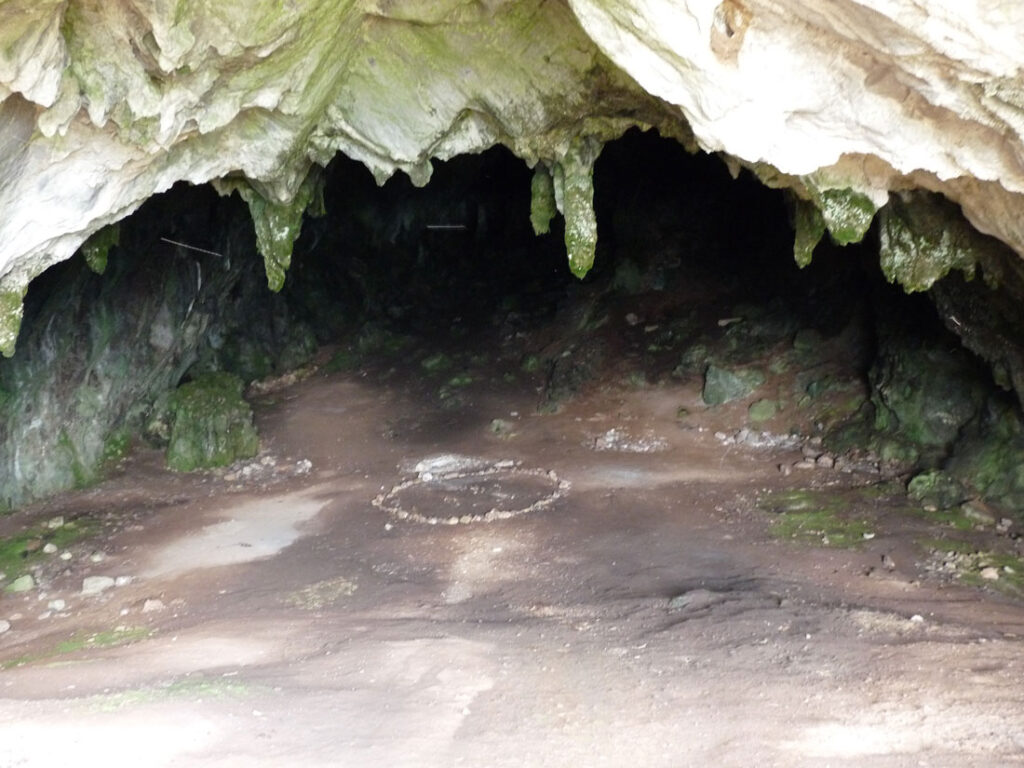
I have had my own unique experience in the Corycian Cave. One June day, hot, dirty, and sweaty after a failed summit of Parnassos (top tip: pay attention to your map and you will avoid this pitfall), I paid a visit to the cave on the way back to Delphi. The approach along a dirt road through the forest was quiet. I was stopped short by a collection of flags, banners, and wind chimes hanging from the trees around the cave’s entrance. Several people in flowing, brightly-coloured robes built fires, carried candles into the cave, or just milled around. There were even several children.
Curious, my party asked this group what they were doing. We assumed they were a modern polytheist group, but they said they were on a yoga retreat. However, their activities in the cave were very striking: they stood in a circle, held hands, and hummed, chanted, and sang. Though it felt a little voyeuristic to be intruding on their ritual, witnessing it was like taking a step back in time, and seeing the Corycian Cave as it may have been thousands of years ago.
The route
There are two options. The shorter one follows the dirt road a few kilometres past the mountain village of Kalyvia Livadiou, north of Arachova. The road is rough, so be prepared to park and hike the final kilometre or two.
The longer route climbs up very steeply from Delphi, with views back down to the sanctuary.

It follows the path mentioned by Pausanias.
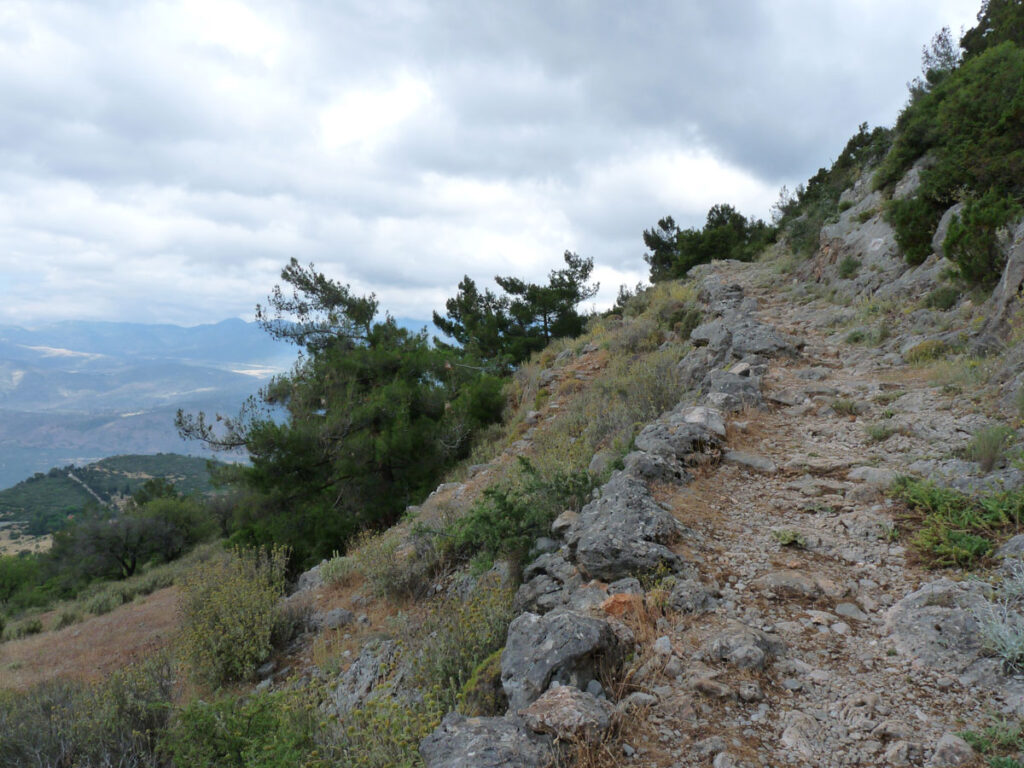
Higher up it winds its way over more gently sloping pasture.

After that you go on through the woods (either on the main track shown below, or on one of the smaller trails that run more or less parallel with the main track off to the right, clearly marked on the Anavasi maps), before a short final climb up to the cave.
From the centre of Delphi to the cave and back is about 19 km, and 900 metres of ascent.

The start point for the route is here. The downloadable GPX file is below.