Thanks to Maria Christodoulou for today’s guest post! You can learn more about Maria’s work at her website www.thegreekherbalist.com. Maria’s book The Greek Herbalist: 50 Medicinal Plants from Ancient Greece for Modern Health is forthcoming with Timber Press in 2027.
Aghia Anna is a small village nestled at the base of Mount Helikon, approximately two hours northwest of Athens. The village offers hiking access to Paliovouna, Mount Helikon’s highest peak, with a marked trail starting in the stillness of the mountain forest.

According to physician Dioscorides (1st century CE) in his text De Materia Medica, Mount Helikon was the best source for hellebore (Helleborus spp.). Referred to as ἑλλέβορος (helléboros) in ancient Greek, the plant was popular for its use as a purgative drug. All hellebore species contain toxic cardiac glycosides and alkaloids, which are poisonous to humans and animals. In Greece, hellebore is known as scarfi, scarpi, or karpi.
Botanical description
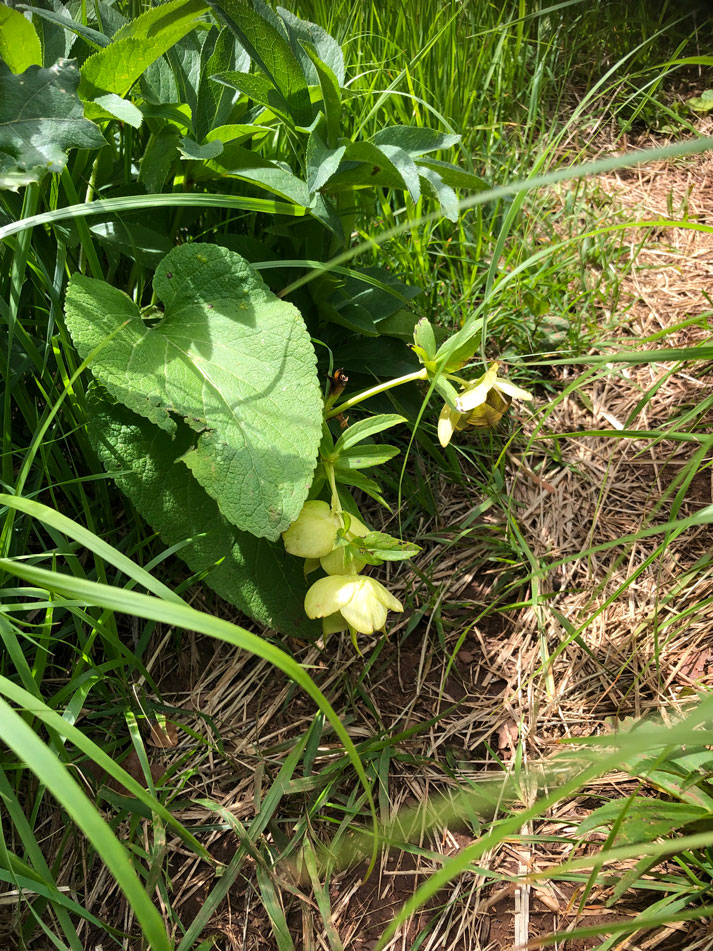
Hellebore is native to Europe, western Asia, northwest Africa, and northern China. There are 15 species, with the majority present in Europe. Only Helleborus cyclophyllus (A.Braun) Boiss. is native to Greece, and is a type of black hellebore also native to Albania, Bulgaria, and the northwest Balkan Peninsula. This species grows in mountain clearings and blooms in early spring with light yellow-green flowers.

Helleborus orientalis, Diomedes Botanical Garden, Athens
Hellebores are an attractive perennial with a deep rhizome, palmate, compound leaves with serrated edges, and elegant five-sepaled blooms in shades of green, white, red, pink, or purple, depending on the species. They have a long flowering period and are popular in gardens for their reliability, beauty, and adaptability to most soil types and light shade.
Hellebore in Ancient Greek medicine
Choose the kind that is sturdy and fleshy, having its innermost part thin, sharp and hot in taste. (Dioscorides, De Materia Medica 4-162, trans. Beck)
Dioscorides described hellebore as a medicine for epilepsy, depression, delirium, arthritis, and paralysis. The root caused vomiting and purging, common therapeutic methods of Greek antiquity.
Application and dosage were related to the intended outcome. Most recipes required small doses, with larger doses reserved to treat maniacal behaviors. Black hellebore was ingested with lentils to induce purging, inserted as a pessary to expel the menstrual flow, applied topically to heal skin diseases, inserted in the ears to heal loss of hearing, boiled with vinegar for toothaches, and made into a poultice for edema.
It was also infused in wine to expel the afterbirth and for abortions. Dioscorides provided his reader with six recipes for hellebore wine, many of which included steeping it in grape must from two to forty days with seawater or a combination of other medicinal plants and products. According to botanist Theophrastus of Eresus (c. 370–287 BCE), hellebore kept its potency for as long as thirty years (Enquiry into Plants, 9.14.1).
Hellebore contained such strong properties that other plants could be affected; if it grew near the roots of grapevines, it would cause the wine to have a purgative effect.
There was also superstition associated with hellebore. When the root was harvested, the digger prayed to Apollo and Asclepius and watched the sky for eagles for “the bird causes death” if it is seen while the digging is underway (Dioscorides, De Materia Medica 4-162, trans. Beck). Inhaling the plant could cause headaches, and to prevent this, the digger must eat garlic and drink wine beforehand. It was also sprinkled around houses to protect against evil spirits followed by a recitation of a spell.
Antikyra
By far the biggest dose of hellebore should be reserved for those who are greedy for money. I would say the sensible approach is for all of Antikyra’s supplies to be directed to them! (Horace, Satires 2.3.82)
A scenic one-hour drive east of Aghia Anna is the sea-side village of Antikyra, located on the north coast of the Gulf of Corinth in central Greece. This village was also mentioned by Dioscorides as a source for the best black hellebore, which grew abundantly on the neighboring rocky mountains. Many ancient writers mentioned Antikyra as a center for the production and preparation of hellebore, especially as the perfect cure for madness.


There was an ancient Greek proverb “You should go to Anitkyra!”, in other words “you’re crazy and you need a dose of hellebore!” (e.g., see Julian, Oration 7, 223b). In the comedy Wasps by Aristophanes (c. 446 – c. 386 BCE), the character Xanthias tells his crazy master, “Drink hellebore!” (1489).
There was even a verb, helleborízō (ἐλλεβορίζω), meaning “to dose with hellebore,” or more figuratively, “to bring one to his senses.”
Some scholars suggest that these manic symptoms were related to epileptic seizures, which are the result of abnormal electrical brain activity.
Hellebore at the kafenio
Jason returns from his hike up to the mountain peak with a cutting of hellebore. I was at the kafenio enjoying a cup of mountain tea (Sideritis spp.), a popular herbal tea throughout Greece.
To my surprise, two elderly men jump from their chairs when they see the familiar plant. “Do you know what this is?” they ask excitedly. Up until that point, I had only been a silent witness to the villagers, mostly older men, enjoying their coffee on a pleasant morning in early June. It may have been many years since they’ve seen hellebore and holding a single stem of the flower seemed to have evoked memories of their youth. I tell them how it was used in antiquity, particularly for those deemed crazy.
They tell me that their fathers and grandfathers used it. They would harvest the plant, dry it, boil it, and then put it in the crevices of trees that were dying or diseased. This technique would help speed up the process to kill the tree so they could remove it more easily, and would be especially helpful to prevent the disease from spreading. I asked if they do this anymore and they said no, the practice was long gone.
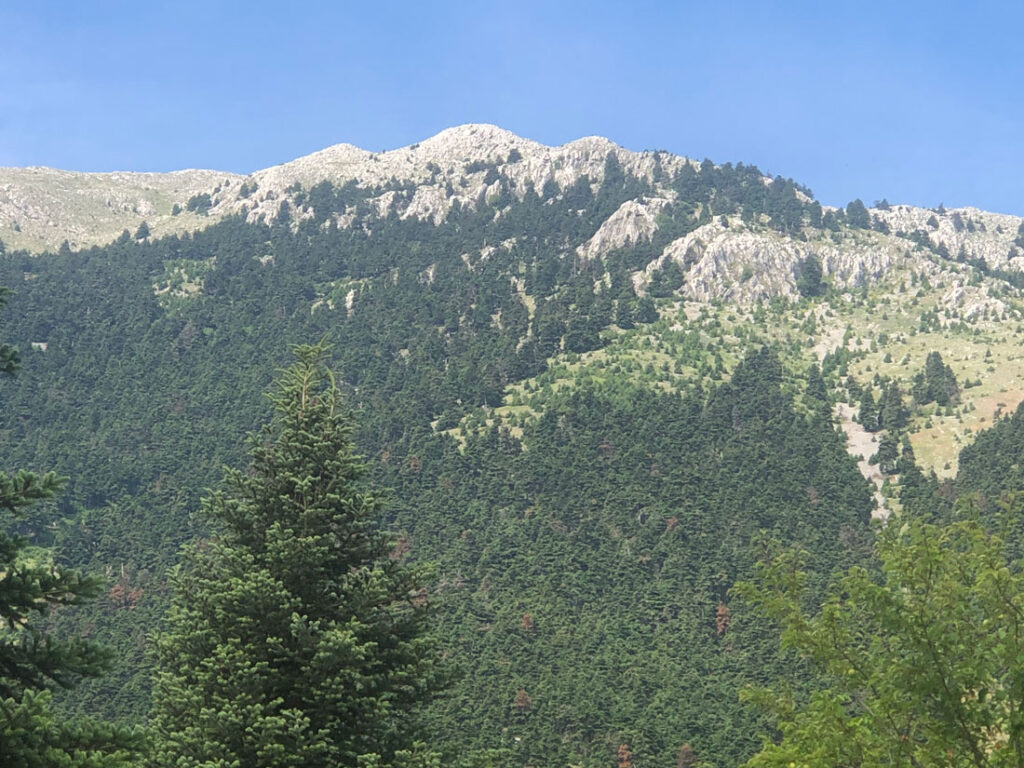
Paliovouna peak from Aghia Anna
With the towering ancient mountain beside us, hellebore brought a heartwarming exchange that would otherwise not have occurred at all. Despite having poisonous properties, hellebore could also be healing in the metaphorical sense of bringing people together in unexpected ways.
Modern pharmacological use
In modern pharmacology, extracts of various hellebore species have been studied and applied for tooth pain (Helleborus foetidus), abortion (H. orientalis), anti-cystitis (H. thibetanus), skin diseases (H. odorus), sore joints (H. niger), and depression (H. niger). Hellebrin, the primary glycoside present, has been studied for cardiovascular health and as a potential therapy for cancer. The root of Helleborus cyclophyllus has been studied for its potential anti-seizure activity.
Hellebore contains several toxic phytoconstituents, including cardiac glycosides and alkaloids, that can cause skin irritations, vomiting, diarrhea, slow heart rate, low blood pressure, paralysis, and seizures, depending on the species. Due to its toxic properties, hellebore is not recommended for internal or external home use.
The route

If you want to see hellebore still growing on the mountainside in late spring, in the places where it was harvested in antiquity, you can follow the path that leads to the summit from the southern edge of Aghia Anna.
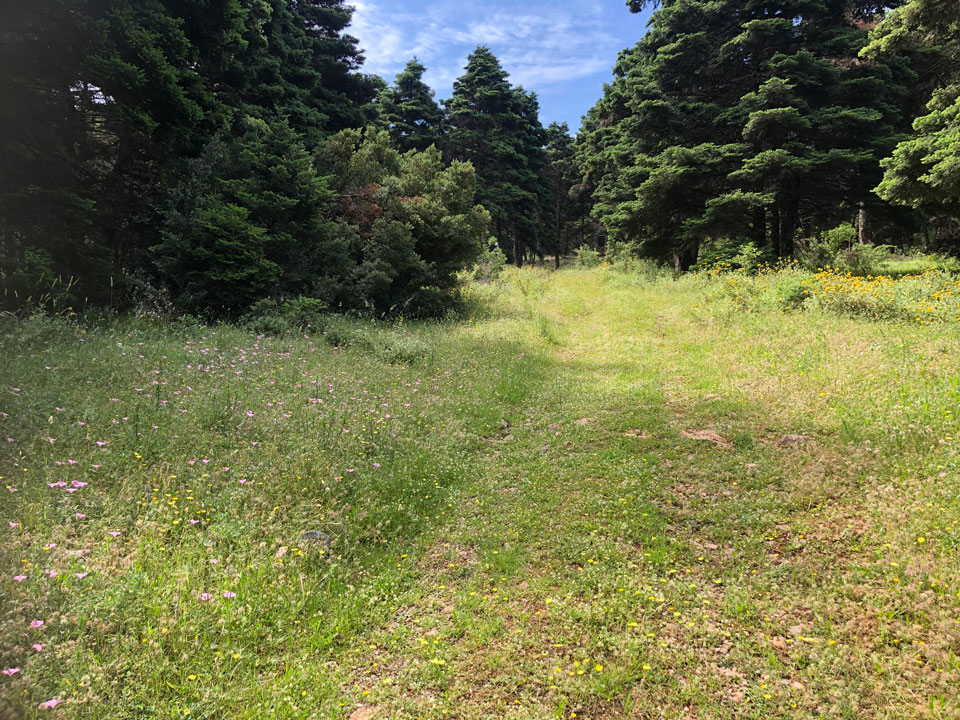
The trail goes steadily up through thick forest.

You start to see hellebore fairly soon, but in early June the best preserved plants were slightly higher up, from about 950 up to 1150 metres above sea level.
As you go higher you come out of the tree cover and on to rockier ground, with views of the peak up ahead.

You pass through a steep-sided abandoned mining area.
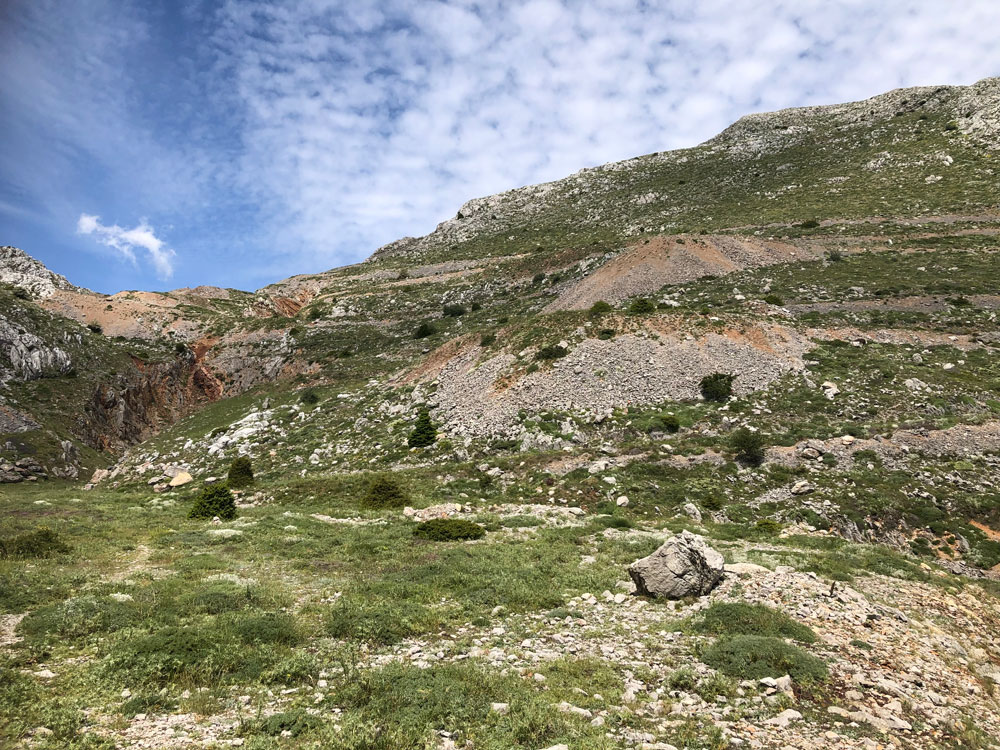
It was swarming with goats in this trip in June 2025.
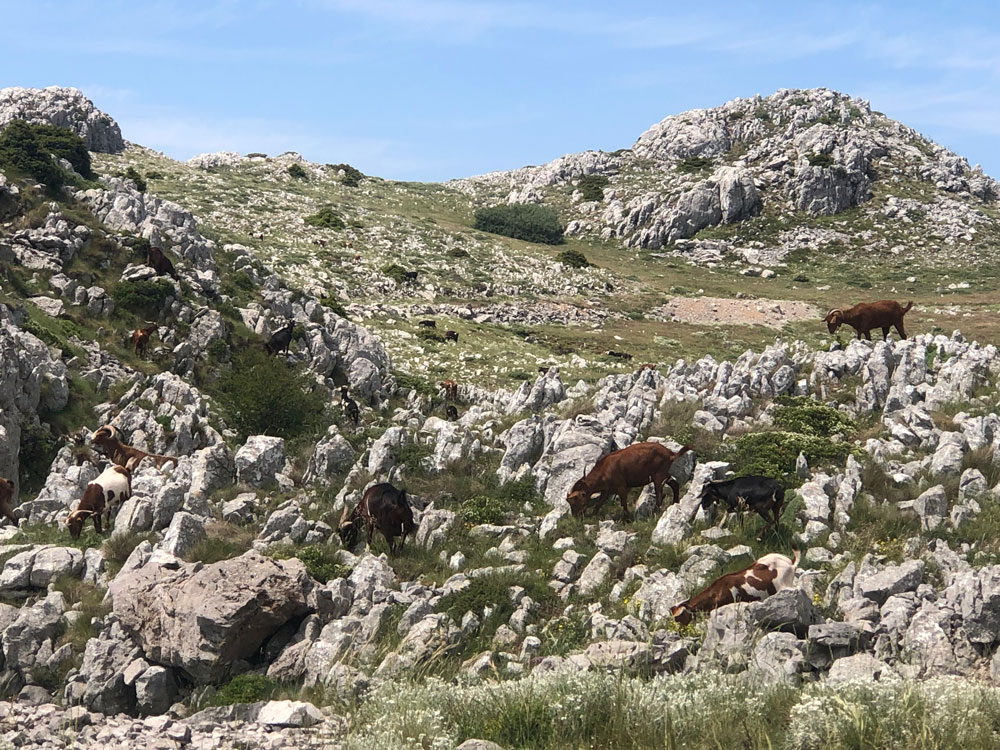
Then it’s just a final steep push to the summit, with amazing views on a clear day, south to the Peloponnese and north and west to Parnassos and far beyond.
If you want to go further, the Anavasi map for Helikon offers a circular route that goes on beyond the summit and then loops back to the north to Aghia Anna from there.

From Aghia Anna to the summit and back is about 11 km, and just over 1000 metres of ascent.
The start point for the route is here. The downloadable GPX file is below.