The Cave of Pan is hidden away in a steep gorge on the western side of Mount Parnitha.
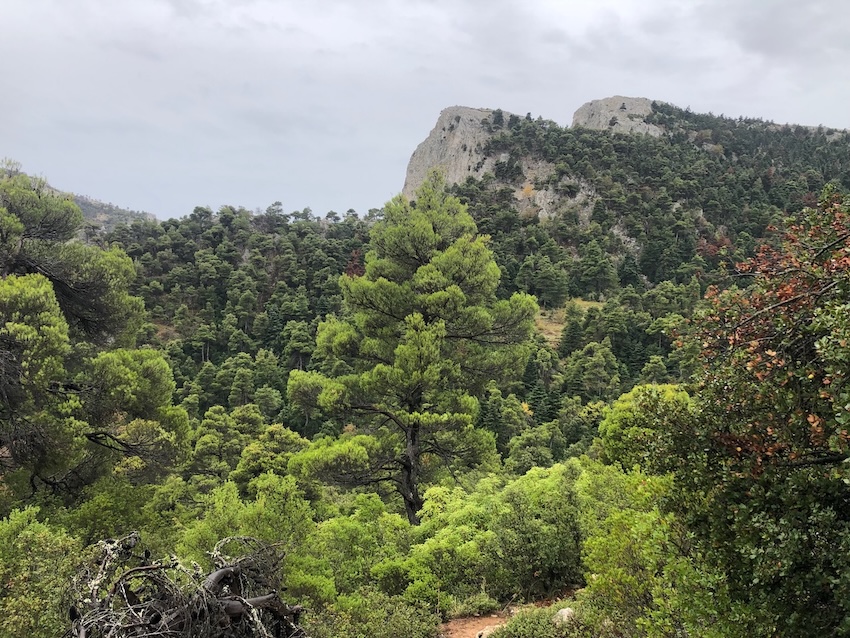
Getting there is a real adventure!
The Cave of Pan: Ancient Evidence
The cave is mentioned in a few places in ancient Greek texts, at most length in Menander’s comic play the Dyskolos. It is one of the key settings for the play, but Menander’s depiction of the cave isn’t at all accurate: he makes it seem much closer to civilisation than it is.
Much more important for understanding why it mattered in antiquity is the archaeological material found within the cave itself.
That includes a vast number of ancient oil lamps—more than 2000 in total, some dating from as late as the 7thcentury CE. They show just how often the cave was visited.
There are several relief sculptures of Pan and the nymphs and other deities.
There are also lots of dedicatory inscriptions. The largest of those records the visit of a late antique worshipper named Nikagoras, who says that he has made the journey twelve times (or perhaps eleven, depending on how we reconstruct the inscription). I think it’s an amazing text!
Nikagoras
Nikagoras seems to have been a member of the Athenian elite. This wasn’t just someone from the local population of peasant farmers and charcoal burners: his family was at the heart of Athenian politics, with connections in high places right across the Roman empire.
Lots of sources refer to that text, but I haven’t ever seen a translation of it online. Here it is!:
[I, Nikagoras, after a difficult a]scent, my beloved Pan, having come here twelve(?) times [seeking protection from your virtue], give thanks [to you through this inscription]. Graciously [bring all my affairs to a] happy conclusion, and send forth [the beautifully-flowing] springs [of the cheerful ny]mphs, having received [the splendid sacrifices of your servant]. Nikagoras, son [of Nikagoras?], the dadouchos (i.e. one of the senior priests at Eleusis) [dedicated this] to the two gods, [having obtained a beautiful estate] in these lands. (Inscriptiones Graecae II2, 4831)
It’s important to say that there is a lot of uncertainty in this—a lot of the inscription is missing, and all the sections in square brackets are conjectures.
But the basic fact is clear: Nikagoras has been to the cave many times in his life!
Worshipping the old gods in late antiquity
If you go there you can begin to appreciate what this really means. It was a serious journey through the hills from the town of Phyle, north-east of Athens, with some tricky route-finding and lots of clambering up and down over the rocks. It’s not a place you would go to casually. It’s fascinating to think of Nikagoras trekking out there so many times.
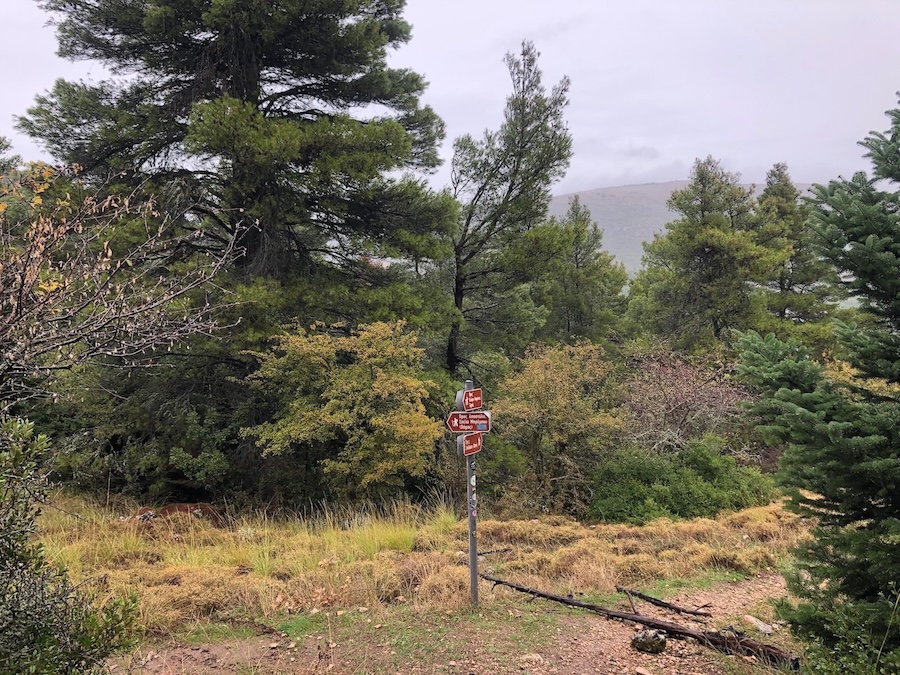
His visits are part of a much wider story about the continuing importance of the old Greek and Roman gods even after the widespread adoption of Christianity in late antiquity. The Cave of Pan was just one of a whole range of summit sanctuaries and sacred caves in Attica that continued to see lots of activity in the fourth and fifth centuries—and in some cases actually an increase in the number of dedications.
As Robin Lane Fox puts it in his 1986 book Pagans and Christians,
the fifth century saw persistent potholing by pagan men of letters and philosophy, in search of their old gods’ ‘presence’ below-ground’. (673)
Edward Dodwell at the Cave of Pan
We get another very different glimpse of the wildness of the route if we jump forward by 1500 years or so to the first description of the cave by a northern European traveller in Greece.
Edward Dodwell visited the cave in the very early 1800s and has left a short account in his Classical and Topographical Tour through Greece.
When he sets out he doesn’t know quite what to expect:
Having been informed, while at Kasha, of a curious cavern, high up the mountain, I resolved to visit it, though, according to all accounts, the excursion was attended with great trouble and fatigue.
…
Having tied our horses to a tree, we descended some steep rocks, crossed the stream Alonaki, which was rushing violently over large stones, and ascending one of the most difficult places I have ever passed, arrived at the long-wished-for cavern, after a most fatiguing journey of five hours… (505-6)
He talks about the huge ‘precipice’ above the cave, and the ‘wild and picturesque interest of the place’. I don’t think it has changed much today.
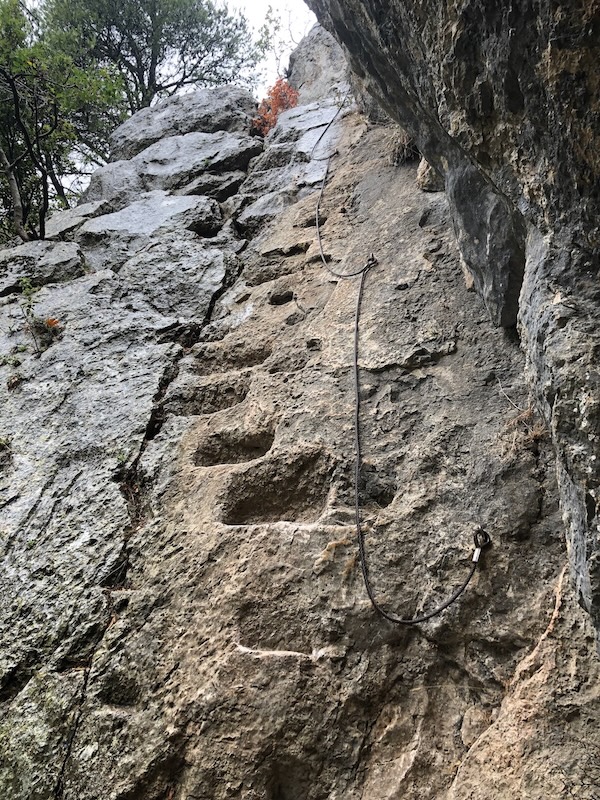
The journey back nearly ends up being even worse. Dodwell makes the mistake of paying their guide on arrival at the cave. The guide promptly climbs up the ancient rock-cut steps in the cliff and announces that he plans to abandon them:
He then pointed out the rock … and, enhancing the difficulty and danger of the ascent, advised us by no means to attempt it: “But as for me,” said he, “I am accustomed to it: observe how easily I can climb up it:” on which he immediately ascended, with perfect facility; and when arrived at the summit burst into a laugh, wishing us a long life, and a safe return to Kasha. (507)
It’s only a mix of threats, pleading and bribery that persuades him to come down.
The route
This walk starts at the car park of the Kleiston monastery.
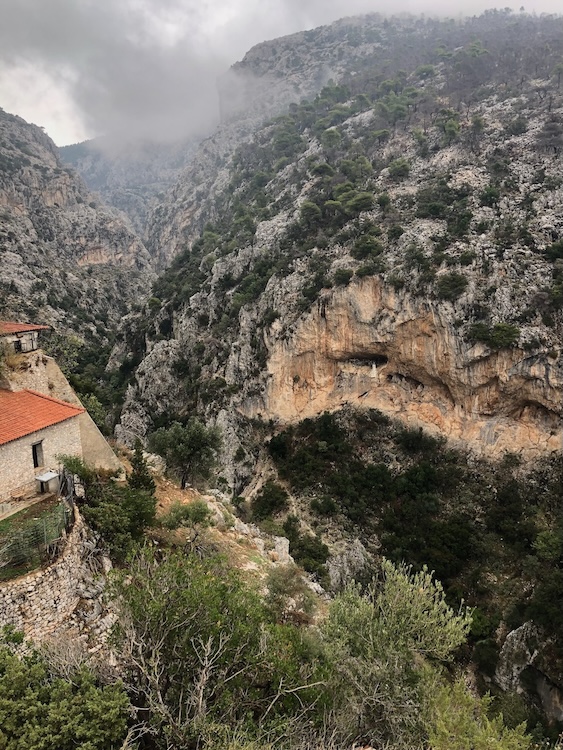
It climbs steadily up over the hillside for several kilometres.

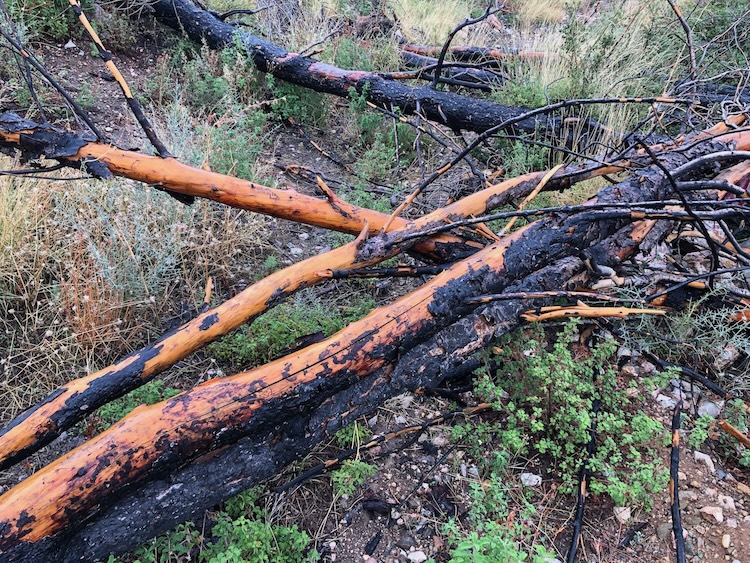
Like other walks in west Parnitha, it’s now obstructed sporadically by blackened and fallen trees after the 2023 fires.
Even so there are some beautiful views back down to Phyle from the ancient path.
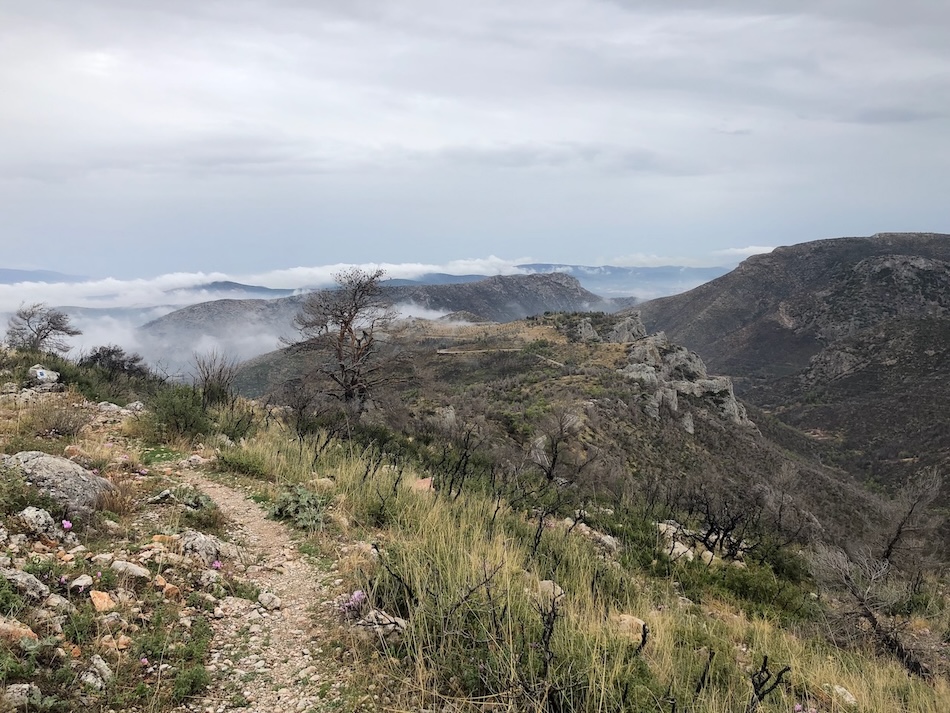
And then once you get over the pass (at Kiafa Kalamara), you suddenly find yourself in an enchanted landscape undamaged by the fires.
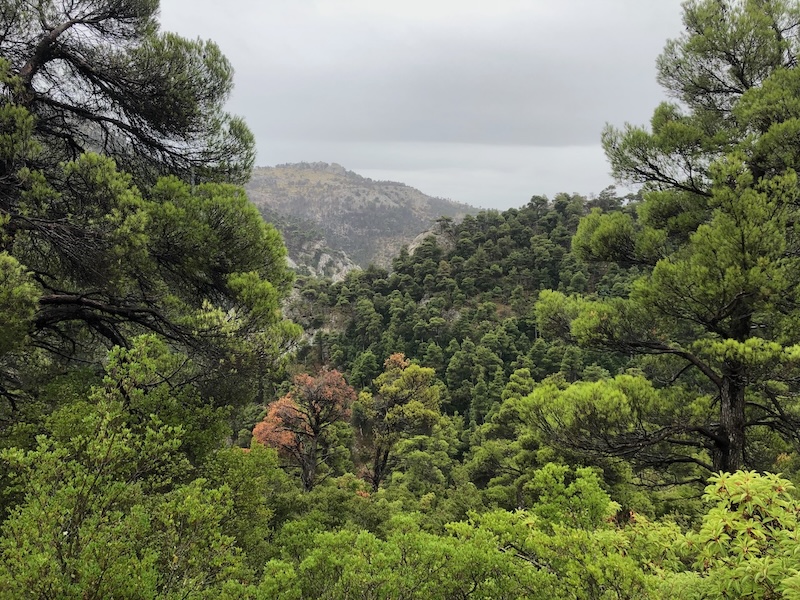
You plunge steeply down into the valley, cross a stream, then ascend a little way, with dramatic views of steep cliffs on all sides.
Then down again, even more steeply, into more and more damp terrain.
As you get closer to the cave you start to come across fixed ropes and metal rungs attached to the rocks.

There’s a final short but slippery ascent up to the cave, and you are there.

Bring a torch: there is a lot to explore inside!
The route below goes back by the same route — or if you want to you can keep going and complete a loop back to the monastery on the other side of the Goura gorge.
If so, the first thing you will need to do is to follow in the footsteps of Dodwell’s unnamed guide and climb up the rock-cut steps by the side of the cave (now with a steel rope fixed to the rock to help you up: can you imagine racing up there like the guide, without the rope?!)
If you do take that route it’s important to say that the final section, crossing the Goura stream and back up to the monastery car park, is very overgrown now after the fires.

The round trip is about 9 km, with 600 metres of ascent.
The start point for the route is here. The downloadable GPX file is below.