This walk takes you through the oak forests of Foloi, in the tracks of Herakles.
Hungarian oaks
Foloi (sometimes transliterated from ancient Greek as Pholoe) is often referred to as a mountain in antiquity, but it doesn’t feel like that when you are there.
It’s more of a high-altitude plateau, stretching southwards from the huge bulk of Mount Erymanthos. It is a good example of the way in which the ancient Greek term oros (mountain) could refer to upland terrain generally, rather than just mountain summits.
It’s an amazing landscape, above all because of the vast number of Hungarian oak trees that cover the plateau for miles on end. It feels quite different from anywhere else I have ever been in Greece.
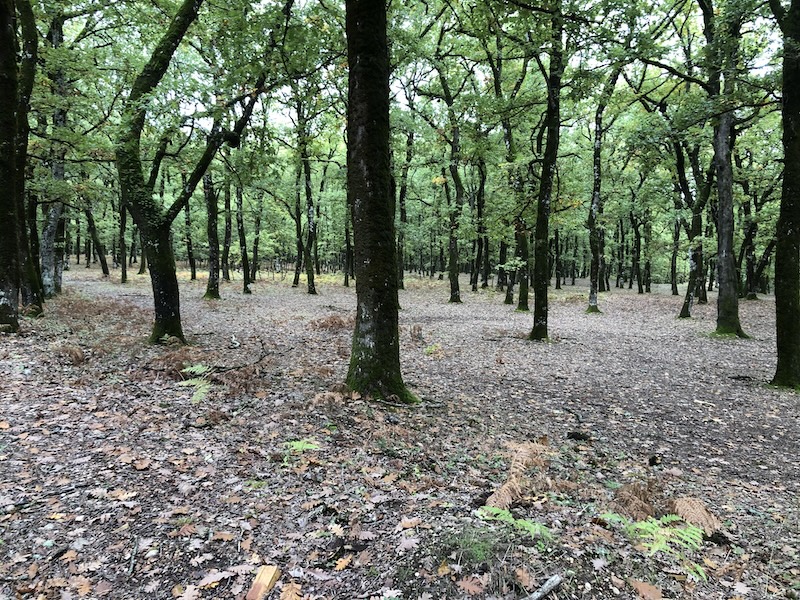
That set-apart quality makes it a an ideal place for imagining the story of Herakles and the centaurs that is said to have taken place there.
This is popular hiking territory: there are lots of routes available online, and lots of guided tours. There was one group of about 30 setting off just behind me when I was here in October 2025.
Most of the online descriptions mention Herakles and the centaurs in passing, but nearly all of them just skate over the surface: it’s very hard to find any account that really dives into the detail of the ancient texts that preserve that story for us. What are these texts like to read?
Herakles and the centaurs
My favourite version (also the longest surviving version) is from the historian Diodorus Siculus (newly translated here).
Diodorus, like others, tacks the story on to the end of his account of Herakles’ killing of the Erymanthian boar on nearby Mount Lampeia (also an offshoot of Erymanthos).
Pholos was a centaur; the nearby mountain Pholoe was named from him. He received Herakles hospitably and opened a jar of wine that had been buried. The mythical stories say that a long time ago Dionysus had left the jar with one of the centaurs, giving orders that it should be opened only on the arrival of Herakles. For that reason, four generations later, when he was entertaining Herakles Pholus remembered the command of Dionysus. When the jar had been opened, and the beautiful smell of the wine, because of its great age and strength, reached the centaurs who lived nearby, it drove them mad. They rushed in a crowd to the dwelling of Pholos and set about in a terrible way trying to steal the wine. Pholos was afraid and hid himself, but Herakles, to the centaurs’ surprise, got to grips with them, resisting their violence … The centaurs advanced on him, some of them carrying pine trees torn out by the roots, some of them huge rocks, some of them blazing torches, some with ox-slaughtering axes. But Herakles resisted them without fear, and fought a battle worthy of his previous achievements. Their mother Nephele (‘Cloud’) assisted them in the fight by sending down heavy rain, which did not harm the centaurs with their four legs, but which made the footing slippery for Herakles, with just two legs to rely on. But even so Herakles put up an astonishing fight against opponents who enjoyed such advantages; he killed most of them, and put the rest to flight. (Diodorus Siculus, Library 4.12.3-6)
Pholos attempts to bury his kin, the dead centaurs, but he is wounded by the barb of a poisoned arrow as he pulls it out from one of the corpses, and dies.

Herakles fighting the centaurs. Boeotian black-figure kantharos, c. 550 BCE, Staatliche Antikensammlung, Munich.
It’s interesting the Diodorus doesn’t seem to envisage this as an oak forest, to judge by his mention of the pines, but even so the present-day landscape of Foloi is an evocative place to reimagine these scenes.
When you are under the oaks it feels almost like being indoors, roofed over by leaves. There were lots of families picnicking when I was here in October 2025, their voices echoing under the trees. It felt as if Herakles and Pholos would not be out of place, opening up the jar of Dionysus in this hospitable, almost domestic space..
It also feels spacious horizontally, with the black trunks standing well apart from each other, so that you can view a long way into the distance.
Can you see with Herakles a first glimpse of the centaurs flitting through the trees, drawn irresistibly to the smell of the wine?
Where Pholos will hide himself, behind these thin trunks, I’m not sure.
At first the roof of leaves might keep out the downpour but then it comes through the canopy irresistibly, so that these children of the cloud feel more and more in their element on their four legs, while Herakles struggles to keep his footing.
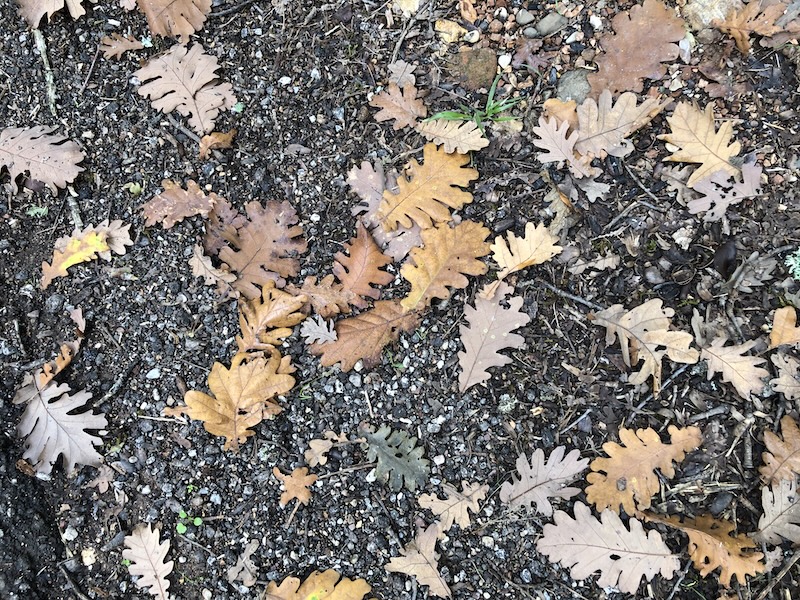
And then finally the struggle is over, the survivors have fled, and we are back to the same muffled quiet as before, with the body of Pholos lying motionless on the carpet of oak leaves, waiting for burial from Herakles at the foot of the mountain.
Eagle and vulture wings
Nearly all of the surviving mentions of Pholoe from antiquity are references to this story, but just occasionally we find a passage where it is mentioned for other reasons.
My favourite of those is from a work by the satirist Lucian, who was writing in the second century CE. He imagines the philosopher Menippus tying wings to his arms –an eagle wing on his right arm and a vulture wing on his left arm — so that he can fly up to the heaven and find out the answers to all the questions about the gods that philosophers down on earth can’t agree on. It also turns out to be a good vantage point for viewing the follies of human society from a position of satirical detachment.
The mountains of Greece are his training ground:
I went up to the Acropolis and launched myself off the cliff down into the theatre. Since I had managed to fly down safely I began to get higher ambitions, and lifting off from Parnes or Hymettos I would fly over to Geraneia. From there I went up to the summit of Acrocorinth, then over Pholoe and Erymanthos as far as Taygetos. (Lucian, Icaromenippus 10-11).
With that training under his belt he tests himself one more time with a flight up to Olympus, and then up to moon.
We could think of Pholoe in this passage as a stepping stone from Erymanthos for Menippus’ flight down to Taygetos in the southern Peloponnese.
If you were trying to take off from Erymanthos with an eagle wing and a vulture wing strapped to your arms it would be perfect! — a downhill run from the summit to pick up speed, then a high-altitude ramp projecting southwards to give you a good lift-off over the mountains of Arkadia.
The route
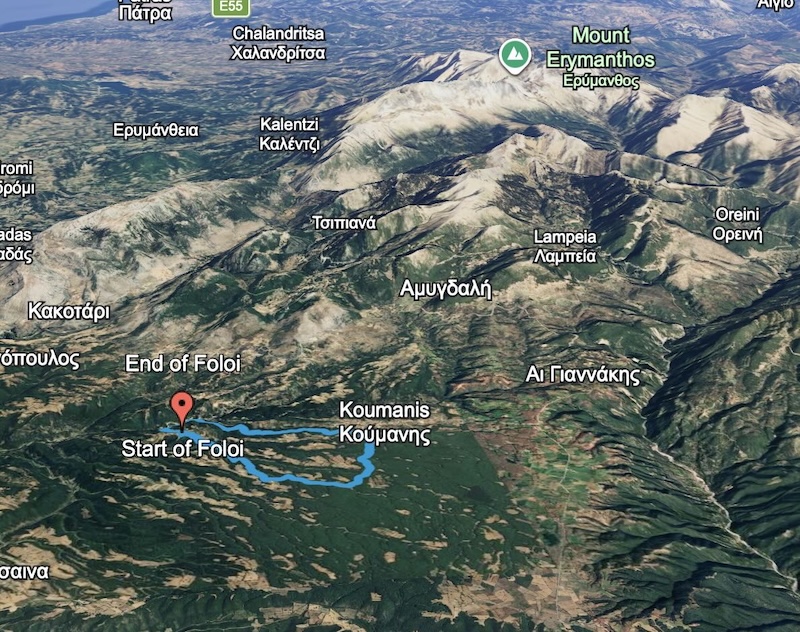
The route starts in the village of Foloi.
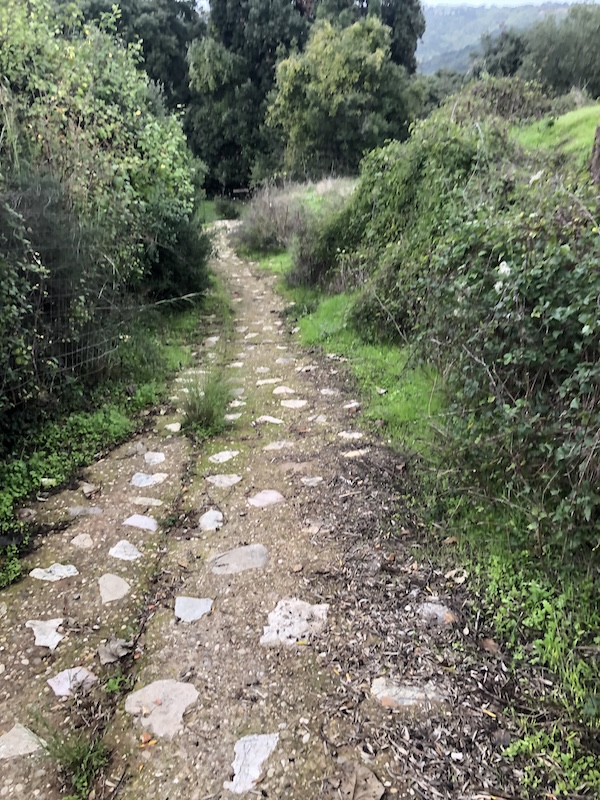
From the northern edge of the village you follow the ‘Foloi trail run’ signs steeply down hill.
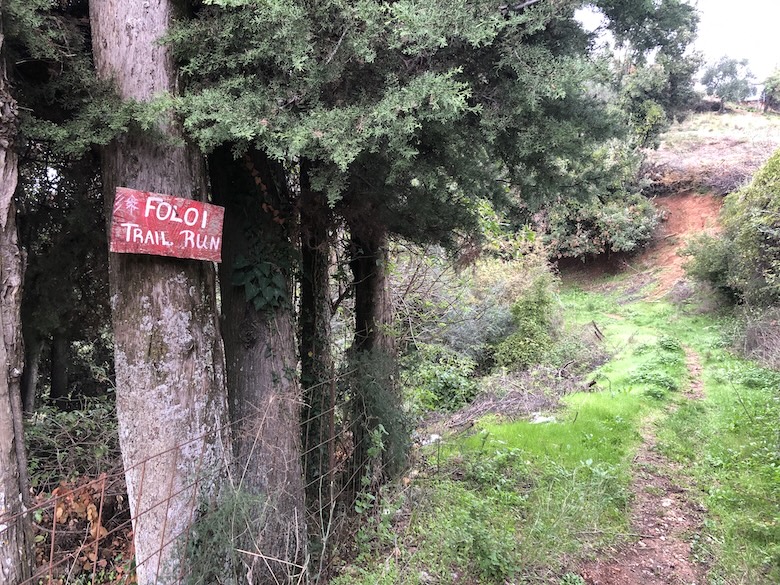
There are red paint splashes to guide you all the way down.
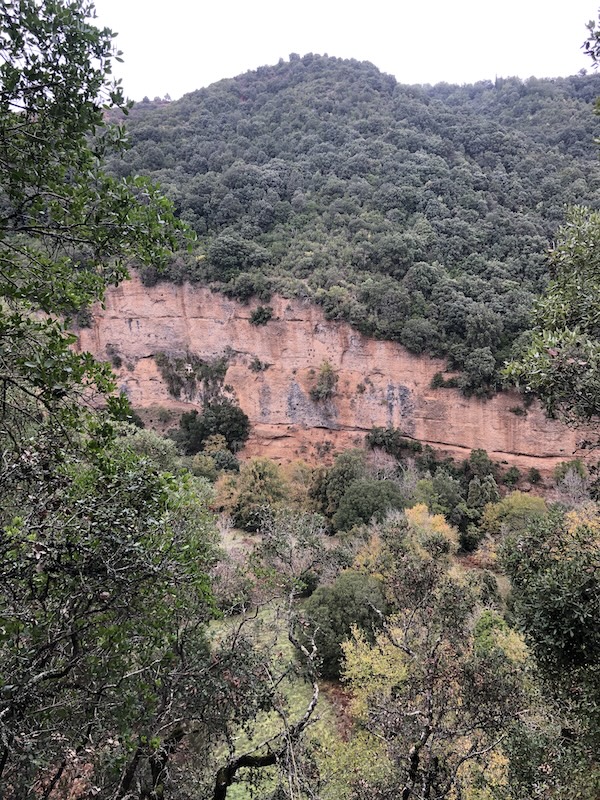
You pass through the spectacular ‘Gorge of the Centaurs’.
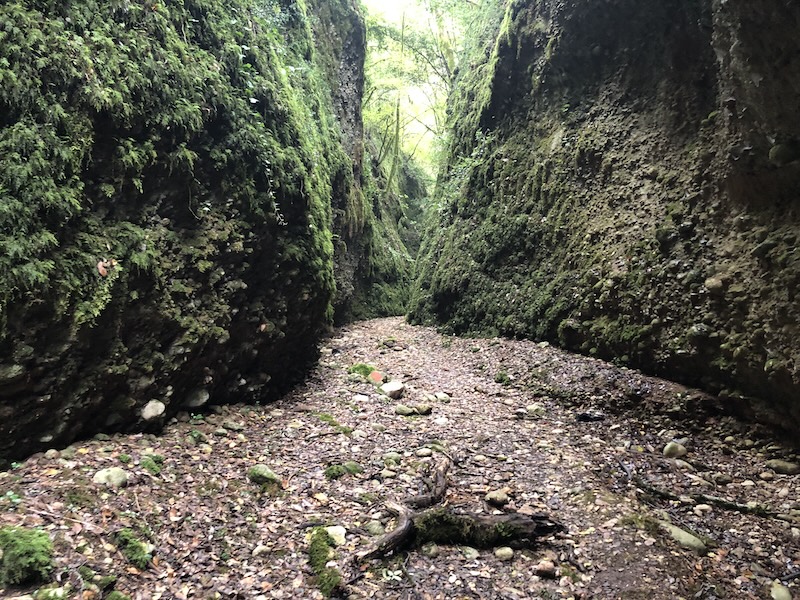
From, there the route climbs steadily to the outskirts of the village of Koumanis, then up into the oak forest.
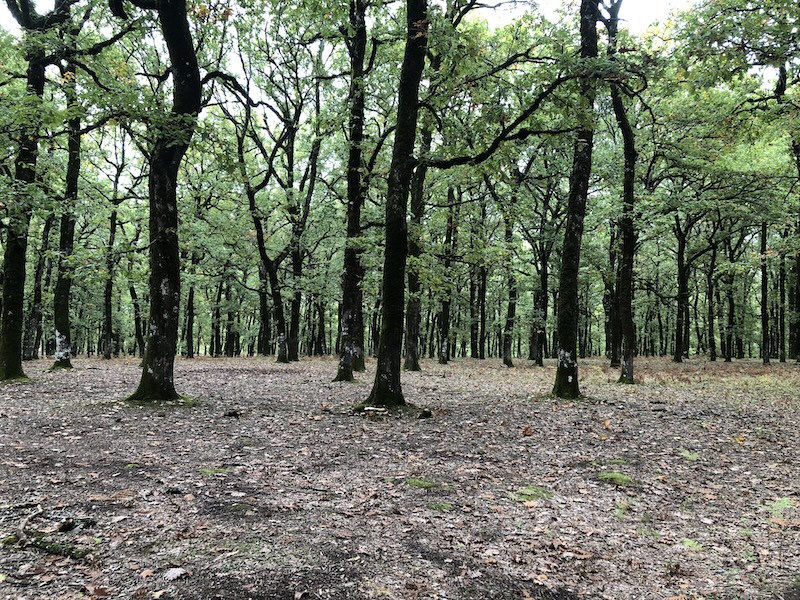
A long loop to the south brings you via a final steep climb back up to the starting point.
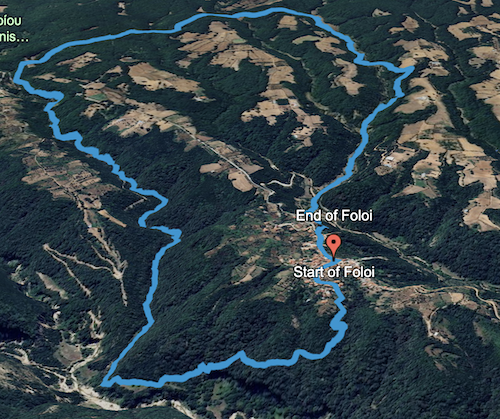
The round trip is about 10 km, with 400 metres of ascent.
The start point for the route is here. The downloadable GPX file is below.